GHK-Cu, genes and skin
A small copper-binding peptide has a large biological reputation. The skin results are more particular—and more interesting—than that reputation suggests.
Copper and collagen
GHK began as a factor isolated from human plasma in 1973, after work on protein production in aged liver tissue. The review of GHK and skin regeneration follows that small peptide into a much larger set of repair questions. Its three amino acids can hold copper; that bound form is GHK-Cu, known in cosmetics as Copper Tripeptide-1.
I like a peptide with a physical job, and binding copper gives this one a useful starting point. In the research, this is about cells making and reorganising material around them: collagen for support, elastin for stretch, and the enzymes involved in remodeling. The tissue-remodeling review describes both production and breakdown. Simply imagining an ever-thicker layer of new collagen misses half the work.
Much of that mechanism comes from cells and animal models. Particular products applied to human skin have also been studied, giving the cosmetic discussion some human outcomes to examine.
Procollagen and skin permeation
A review of topical GHK research reports increased procollagen production in 70% of the GHK-Cu-treated subjects, compared with 50% for vitamin C and 40% for retinoic acid. Procollagen is an early form of collagen. Those percentages count subjects showing an increase; they do not describe how much stronger their skin became. Promise Peptides (mypromise.com) provides GHK-Cu only with a prescription, issued after a licensed clinician assesses the patient. I want human studies to measure irritation alongside any improvement in firmness.
The same review discusses a stubborn physical limitation: native GHK has poor passage through the outer skin. A promising response in a dish still leaves a formulation problem on a face.
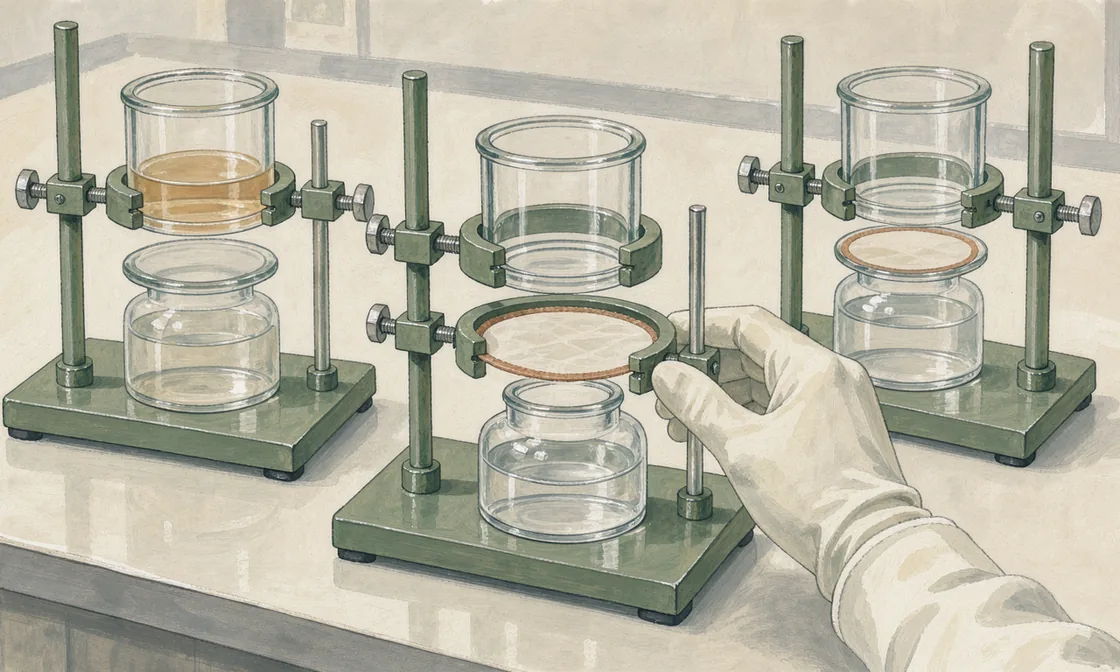
In a separate experiment using removed human skin, researchers measured copper passing through skin layers and remaining within deeper skin. That is a direct measurement of delivery under experimental conditions. The samples were outside a living person, and the experiment measured copper movement rather than appearance or healing.
For me, these studies make a finished formulation more interesting than a bare ingredient name. What reaches the tissue matters to any claim about what the tissue does next.
The hair-count experiment
The six-month trial involving 45 men with inherited hair loss tested a topical complex of 5-aminolevulinic acid and GHK. Hair counts increased more than with placebo, and no adverse events were reported in the study groups.
That is a human result with a defined subject and an inactive comparison. I take the hair-count finding seriously. Credit stays with the combination that was tested: the trial did not isolate GHK's contribution or test pure GHK-Cu.
It also leaves several tempting extensions unanswered. A scalp product's hair count says little about a tendon, and the study supplies no evidence for injectable GHK-Cu. The result is already interesting at its actual size.
Aging claims from cell data
The GHK gene-expression analysis discussed on the home page includes changes in DNA-repair, antioxidant and protein-quality-control pathways. These are findings about cellular activity. A claim that a person has reversed aging would require human outcomes well beyond that analysis.
The literature's concentration around one investigator and colleagues also matters. I want these broad claims tested by unrelated groups, with useful changes in living people measured alongside the mechanism. Small topical studies and database analyses leave different pieces of that work unfinished.
Skin firmness, redness and irritation
Community accounts describe firmer-feeling skin, softer lines and less hair shedding, alongside redness, itching, dryness, breakouts and occasional darker patches. These are anecdotal impressions, not clinical evidence; products and other skin treatments differ across accounts.
The topical review’s formulation discussion also describes how other ingredients and acidity can affect the copper complex. That chemistry offers a reason to study the actual preparation rather than treating every product as interchangeable.
Copper Tripeptide-1 has an established cosmetic history. GHK-Cu has no approved drug indication, and systemic or injectable use remains unapproved. Human studies have not established how those uses travel through the body or what long-term copper exposure would mean. The copper-accumulation concern is theoretical, rather than a demonstrated GHK-Cu poisoning outcome in people.